
CELEBRITY
🚨JUST IN: 🇨🇦🇬🇱 Canada PM Mark Carney says: “Canada will always support the sovereignty and territorial integrity of Denmark, including Greenland.”

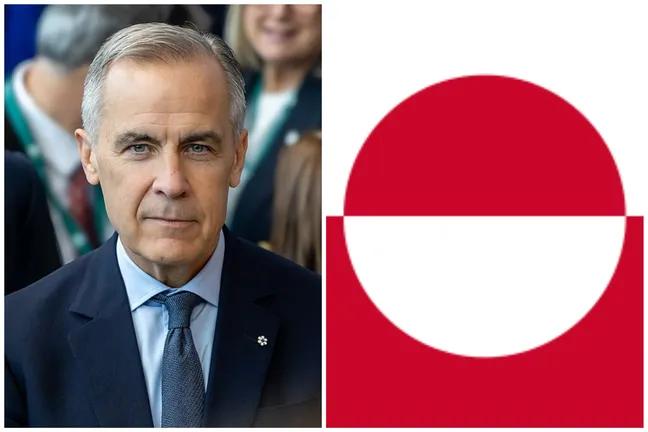
Canada Reaffirms Strong Support for Denmark’s Sovereignty Over Greenland Amid U.S. Tensions
Ottawa/Paris, January 7, 2026 – Canadian Prime Minister Mark Carney has issued a firm declaration of support for Denmark’s territorial integrity, including Greenland, in response to renewed statements from the United States regarding the Arctic island.
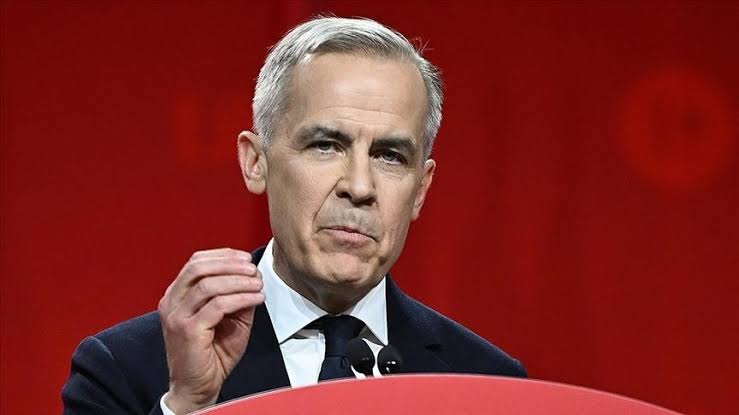
In a social media post and subsequent statements following a meeting with Danish Prime Minister Mette Frederiksen in Paris on January 6, Carney stated: “Canada will always support the sovereignty and territorial integrity of Denmark, including Greenland.” He emphasized the shared responsibility between Canada and Denmark for Arctic security and resilience, describing the two nations as “Allies and partners.”
The remarks come amid escalating international concern over U.S. President Donald Trump’s repeated assertions that the United States “needs” Greenland for national security reasons. Trump has revived his long-standing interest in acquiring the vast Arctic territory, which is an autonomous part of the Kingdom of Denmark, citing strategic military importance and potential threats from Russian and Chinese activities in the region.
Carney’s meeting with Frederiksen took place on the sidelines of broader discussions involving European leaders and a “Coalition of the Willing” focused on Ukraine peace negotiations. During the encounter, Carney reiterated Canada’s commitment, adding that “the future of Greenland and Denmark are decided solely by the people of Denmark and Greenland.”
This position aligns with a joint statement issued by leaders from France, Germany, Italy, Poland, Spain, the United Kingdom, and Denmark, which declared: “Greenland belongs to its people. It is for Denmark and Greenland, and them only, to decide on matters concerning Denmark and Greenland.” Canada and the Netherlands have also endorsed this stance.
Additional steps announced by the Canadian government include a planned visit to Greenland in early February by Indigenous Governor General Mary Simon and Foreign Minister Anita Anand. Anand is set to officially open Canada’s new consulate in Nuuk, described as a “concrete step” in bolstering engagement and supporting Danish sovereignty in the region.
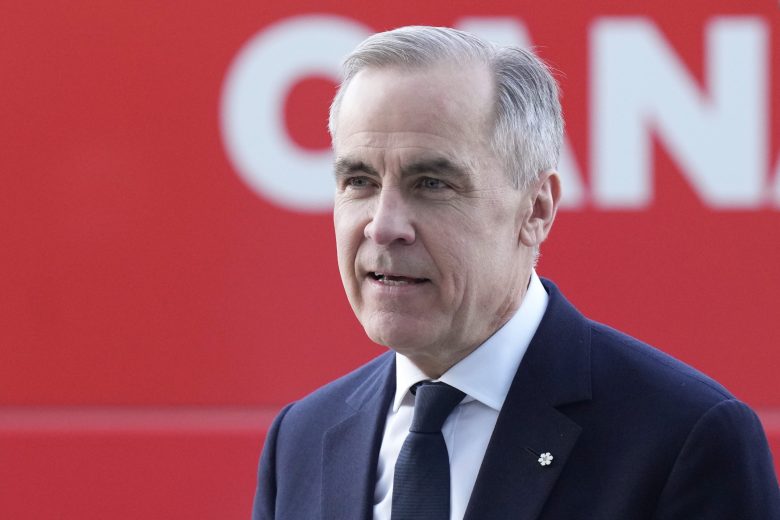
Greenland, the world’s largest island with a population of approximately 57,000, holds significant strategic value due to its location in the Arctic, rich mineral resources, and existing U.S. military presence at Pituffik Space Base. Trump first publicly floated the idea of purchasing Greenland during his initial presidency in 2019, an overture firmly rejected by Denmark. The issue resurfaced in late 2025 with the appointment of a U.S. special envoy to Greenland and has intensified in recent days.
Danish Prime Minister Frederiksen has warned that any U.S. attempt to annex Greenland could spell the “end of NATO,” given Denmark’s membership in the alliance. Greenland’s own Prime Minister, Jens-Frederik Nielsen, has dismissed the notion of a takeover as “disrespectful” and emphasized the island’s desire for stronger ties with the U.S. on its own terms, while rejecting annexation.
Nordic foreign ministers and other European allies have echoed calls for respect of international law, sovereignty, and territorial integrity.
Canada’s Arctic Interests
As an Arctic nation sharing maritime boundaries and historical ties with Greenland—resolved amicably in a 2022 agreement over Hans Island—Canada has a vested interest in regional stability. Prime Minister Carney’s government has prioritized defense spending to meet NATO targets and enhanced Arctic security amid growing geopolitical competition.
Analysts view Canada’s swift and vocal support as a signal of transatlantic solidarity at a time of strain in U.S.-ally relations, particularly following recent U.S. actions elsewhere.
The situation remains fluid, with European leaders urging collective Arctic security through NATO while firmly opposing any unilateral changes to Greenland’s status.

Telling the military to disobey illegal orders is not treason. Telling Ukraine to obey Russian-dictated orders is…

BREAKING: James Talarico UNLOADS on Trump and shows why Trump tried to censor him in powerful interview with Stephen Colbert…

News update : If Trump Wants People to Smile More, He Should Resign..

Breaking : Oscar-winning actor Robert Duvall, whose career has spanned seven decades, has died at 95, his wife announced. Here’s what we know…

BREAKING: Senator Mark Kelly announces that he’s “seriously” considering a presidential run after a string of high-profile victories against Trump’s corrupt Defense Secretary Pete Hegseth. His credentials speak for themselves…

BREAKING: Epstein victim just released tapes of Donald Trump that will force him to resign from the presidency…

Elon Musk is the first person ever to reach a $800,000,000,000 net worth. But Musk recently doubled down on the idea that “money can’t buy happiness.” When you own the stars, the platforms, and the future of transport, what is left to chase?

Trump: “Say Whatever You Want — I Can’t Be Impeached, I’ll Run Again, and I’ll Win”

Obama knew what Trump was, he warned everyone, and y’all accused him of overreacting. Raise your hand if you agree Barack Obama is 1000X better than Trump ✋

Breaking: Petition for Trump’s Impeachment Surges Past 100,000 Signature topping 900,000 so far Raise your hand if you want Trump impeached immediately…

U.S. taxpayers could receive record-high refunds under a sweeping tax plan backed by Donald Trump, sparking renewed debate over who stands to gain most from the legislation…
