
NEWS
The USS Gerald R. Ford, the biggest U.S. aircraft carrier, has left port near the Greek island of Crete on Thursday…

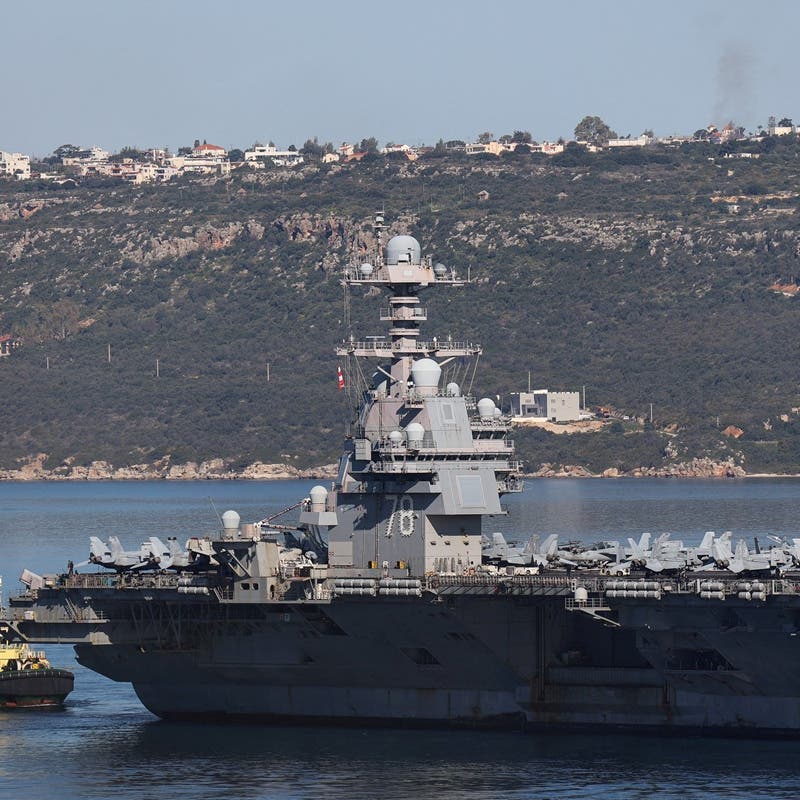
The USS Gerald R. Ford, the largest and most advanced aircraft carrier in the U.S. Navy, departed from a port near the Greek island of Crete on Thursday, February 26, 2026, amid heightened geopolitical tensions in the Middle East.
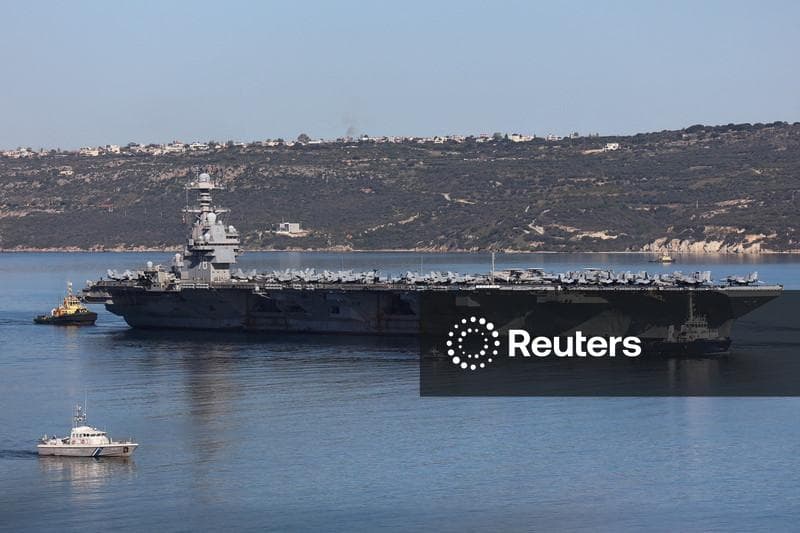
The supercarrier left Souda Bay, a key U.S. naval support facility on Crete, after a brief stopover for resupply—including food, fuel, and ammunition. It is now heading toward the eastern Mediterranean, with reports indicating it is bound for waters near Haifa in northern Israel, where it could arrive as early as Friday or dock in the coming days.
This movement marks the latest phase in the ship’s extended deployment, which began on June 24, 2025, from Naval Station Norfolk, Virginia. Originally planned as a routine rotation, the mission has been extended multiple times. The Ford spent several months operating in the Caribbean before being redirected toward the Middle East in mid-February 2026. It transited the Strait of Gibraltar around February 20 and entered the Mediterranean, reaching over eight months at sea by late February—approaching or potentially surpassing post-Vietnam era records for carrier deployments.
The departure coincides with ongoing indirect nuclear negotiations between the United States and Iran, mediated through Oman and held in Geneva. While both sides have expressed some optimism after recent rounds, no breakthrough has emerged to curb Tehran’s nuclear program ambitions. The U.S. has framed the carrier’s repositioning as part of a broader military buildup to exert pressure on Iran and bolster deterrence in the region.
The USS Gerald R. Ford (CVN-78) leads Carrier Strike Group 12 and is joining other U.S. naval assets, including the USS Abraham Lincoln Carrier Strike Group, in the area. As the lead ship of the Ford-class, it represents a leap in technology with features like advanced arresting gear, electromagnetic catapults, and enhanced automation, supporting up to 75+ aircraft. At over 100,000 tons displacement and more than 1,100 feet long, it remains the world’s largest warship.
The prolonged deployment has tested the crew’s resilience. Navy officials have highlighted the sailors’ readiness and morale-boosting opportunities during the Crete port call, though some reports note challenges including mechanical issues earlier in the cruise and strains from repeated extensions.
This redeployment underscores the U.S. commitment to allies in the region, particularly Israel, amid persistent regional instability. The carrier’s presence adds significant airpower projection capability, with its strike fighters, electronic warfare aircraft, and support assets ready for a range of missions if called upon.
As the situation evolves, the USS Gerald R. Ford’s position off the Israeli coast—or potentially in Haifa—serves as a visible symbol of American naval strength in a volatile theater.

BREAKING: Israeli Defense Minister Israel Katz says Israel has launched a ‘preemptive’ strike on Iran, as Iranian state media report explosions in eastern and northern Tehran.

The USS Gerald R. Ford, the biggest U.S. aircraft carrier, has left port near the Greek island of Crete on Thursday…

STATE OF ALERT: The State Department is allowing non-essential personnel working at the U.S. Embassy in Jerusalem to leave Israel ahead of possible strikes on Iran.

BREAKING: Missiles have been launched from Iran towards Israel, says the Israeli military…

Live updates: U.S. military begins ‘major combat operations in Iran,’ Trump says…

DIVIDED STATES: Sen. John Fetterman said he was likely the only Democrat to shake hands with President Trump at the State of the Union, describing his side of the aisle’s conduct as “disappointing,” adding he found it sad so many of his colleagues didn’t show up…

LET FREEDOM RING: White House Press Secretary Karoline Leavitt shares what Americans can expect during President Trump’s State of the Union address tonight:

President Donald Trump won the 2024 presidential race after his initial opponent, then-President Joe Biden, withdrew over worries about his age and mental sharpness,” writes Aaron Blake…

PRESIDENT TRUMP reiterated his peace through strength foreign policy strategy during his State of the Union address…

‘AMERICA FIRST’: President Trump predicts jobs and investment will flood the country because “we finally have a president who puts America first.”

LINES DRAWN: President Trump says the first duty of the U.S. government is to keep American citizens safe…
