
CELEBRITY
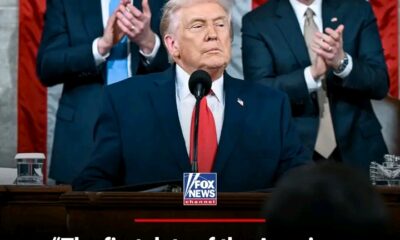
PRESIDENT TRUMP reiterated his peace through strength foreign policy strategy during his State of the Union address…

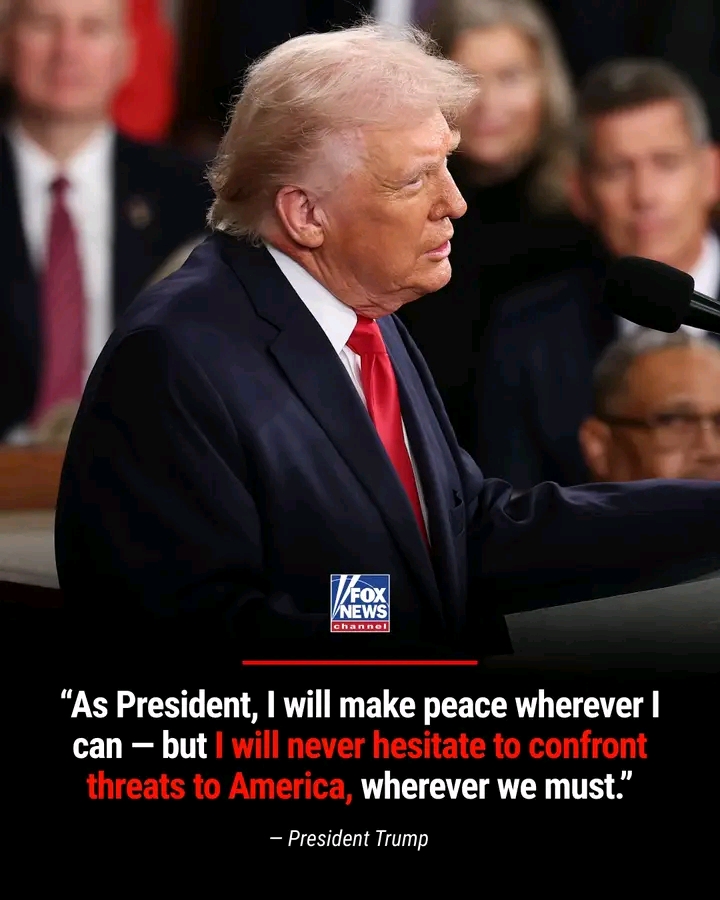
President Donald Trump reiterated his longstanding “peace through strength” foreign policy strategy during his State of the Union address on February 24, 2026, framing it as a cornerstone of renewed American global leadership and national security.

In the speech, delivered to a joint session of Congress and lasting nearly two hours—the longest in U.S. history—Trump emphasized that military dominance and resolute action deter aggression and prevent conflicts rather than provoke them. He explicitly stated, “We have to be strong, because hopefully we will seldom have to use this great power that we built together. It’s really called peace through strength, and it’s been very, very effective.”
This doctrine, a recurring theme from his first term and central to his second, underpinned several highlights Trump presented as major foreign policy successes in his first year back in office. He claimed his administration had ended eight wars through bold diplomacy backed by unmatched military readiness. The president pointed to specific actions, including U.S.-brokered peace agreements, progress toward stability in Gaza (without credit for hostage releases during a truce, despite ongoing violence), and operations in the Western Hemisphere.
Notably, Trump celebrated the January 2026 military raid that captured former Venezuelan President Nicolás Maduro, bringing him to the U.S. to face charges. He described this as a “colossal victory” for American security, curbing drug cartels and foreign interference in the region. Trump also referenced past strikes on Iranian nuclear facilities in 2025, which he said “obliterated” key elements of Tehran’s program, while warning that Iran continues pursuing missiles capable of reaching the U.S. and reiterating his preference for diplomacy but firm stance against allowing a nuclear-armed Iran.
On alliances, Trump praised strengthened NATO commitments, noting that member countries—described as “friends and allies”—had agreed to boost defense spending significantly (with some reports citing a push toward 5% of GDP), reducing the burden on the U.S. and reinforcing collective deterrence.
The address tied this foreign policy approach to broader domestic gains, arguing that a strong military creates jobs, restores global respect for America, and enables peace without frequent use of force. Trump thanked congressional Republicans for approving a record $1 trillion defense budget, framing it as essential: “We have no choice. We have to be strong.”
Reactions varied along partisan lines. Supporters, including White House statements and Republican lawmakers, hailed the speech as proof of a “Golden Age” of American resurgence, with peace achieved through unmatched strength. Critics, including some Democratic responses and analyses from think tanks like the Council on Foreign Relations, noted the speech’s heavier focus on domestic issues like the economy, border security, and immigration, with foreign policy often linked to those priorities. Some pointed out limited detail on ongoing challenges, such as Ukraine (mentioned briefly in hopes for peace and European burden-sharing), and questioned claims amid mixed global perceptions.
Overall, Trump’s reiteration of “peace through strength” served as both a defense of his record and a promise for the future: America would pursue peace aggressively but confront threats decisively when necessary, backed by overwhelming military and economic power. As the nation approaches its 250th anniversary, the president positioned this strategy as key to ensuring the U.S. remains respected, secure, and dominant on the world stage.

DIVIDED STATES: Sen. John Fetterman said he was likely the only Democrat to shake hands with President Trump at the State of the Union, describing his side of the aisle’s conduct as “disappointing,” adding he found it sad so many of his colleagues didn’t show up…

LET FREEDOM RING: White House Press Secretary Karoline Leavitt shares what Americans can expect during President Trump’s State of the Union address tonight:

President Donald Trump won the 2024 presidential race after his initial opponent, then-President Joe Biden, withdrew over worries about his age and mental sharpness,” writes Aaron Blake…

PRESIDENT TRUMP reiterated his peace through strength foreign policy strategy during his State of the Union address…

‘AMERICA FIRST’: President Trump predicts jobs and investment will flood the country because “we finally have a president who puts America first.”

LINES DRAWN: President Trump says the first duty of the U.S. government is to keep American citizens safe…

The Supreme Court just blocked Trump’s big tariffs plan under emergency powers, ruling 6-3 against him. Raise your hand if you want Trump impeached immediately ✋

“Donald Trump is unfit to be president. He’s corrupt, a serial liar, and he’s covering up the Epstein files,” Rep. Ted Lieu Do you agree with Ted Lieu?

BREAKING: Barack Obama is reportedly preparing to run in the 2028 U.S. presidential election. Raise your hand if you want Obama in 2028 ✋

Senator Mark Kelly: I think Trump was a horrible and failed president in his first term. Then he got re-elected, as a convicted felon, by the way. And I think he has exceeded all expectations about how bad he can be in a second term. 💯 Do you agree with Mark Kelly

Senator Patty Murray’s statement that “Trump is a disgrace” and the “most corrupt president in American history by a long shot” highlights the deep political divide and ongoing criticism of Donald Trump’s presidency…
