
CELEBRITY
“JUST IN: Trump can be Impeached by Congress and JAILED for International Law Breaches for Invading sovereign nation Venezuela. Raise your hand if you agree 🖐️”

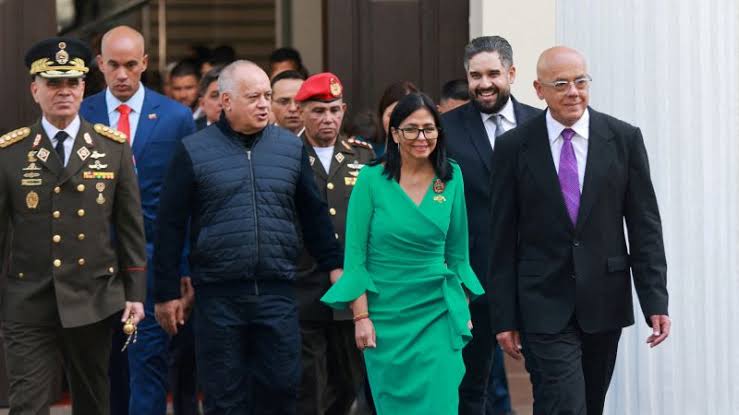
Reflects a highly charged claim circulating in some online discussions and among critics of the Trump administration. It stems from the U.S. military operation on January 3, 2026, where American forces conducted airstrikes in Venezuela, captured President Nicolás Maduro and his wife Cilia Flores, and transferred them to the United States to face federal drug trafficking and related charges.
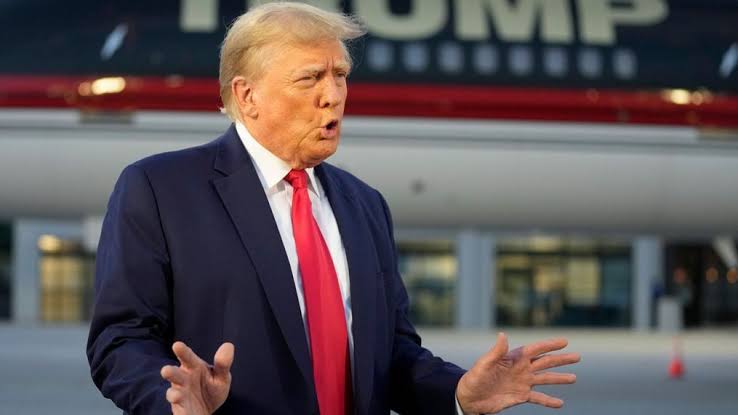
This event, often described as the 2026 United States intervention in Venezuela, has sparked intense debate over its legality under both U.S. constitutional law and international law. While some Democratic lawmakers and legal experts have called for impeachment proceedings against President Trump, the notion of him being “jailed” for these actions remains far more speculative and unlikely in practice.
Background on the Operation
In the early hours of January 3, 2026, U.S. special forces (including Delta Force elements) raided locations in Caracas, including Maduro’s residence. The strikes killed Venezuelan security personnel and reportedly some civilians. The administration framed the action primarily as a law-enforcement operation to apprehend an indicted fugitive (Maduro faced U.S. charges from 2020 related to narcoterrorism), supported by military assets under the president’s “inherent constitutional authority.” President Trump later stated the U.S. would “run” Venezuela temporarily to stabilize it and facilitate oil industry privatization, with U.S. companies gaining significant control over the country’s vast reserves.
The administration denied it was a full-scale “invasion” or occupation, emphasizing no large-scale ground troops remained and that the goal was regime decapitation rather than permanent control. Interim leadership under Delcy Rodríguez has since cooperated with U.S. demands in some areas, amid threats of further action if compliance falters.
Claims of International Law Violations
Critics, including international law experts, organizations like Amnesty International, the New York City Bar Association, and Chatham House, argue the operation violated core principles of international law:
UN Charter Article 2(4) prohibits the use of force against another state’s territorial integrity or political independence, except in cases of self-defense (Article 51) or UN Security Council authorization—neither of which applied here.
The administration’s justification (linked to drug trafficking) has been widely dismissed as insufficient for military force on sovereign soil, lacking evidence of an imminent armed attack on the U.S.
Comparisons have been drawn to past U.S. actions (e.g., the 1989 Panama invasion to capture Manuel Noriega), but many analysts note key differences: Venezuela posed no direct military threat, and the operation extended to broader regime-change and resource-control aims.
The action has been labeled by some as a “crime of aggression” under UN definitions, potentially eroding the post-WWII rules-based order and setting precedents for other powers.
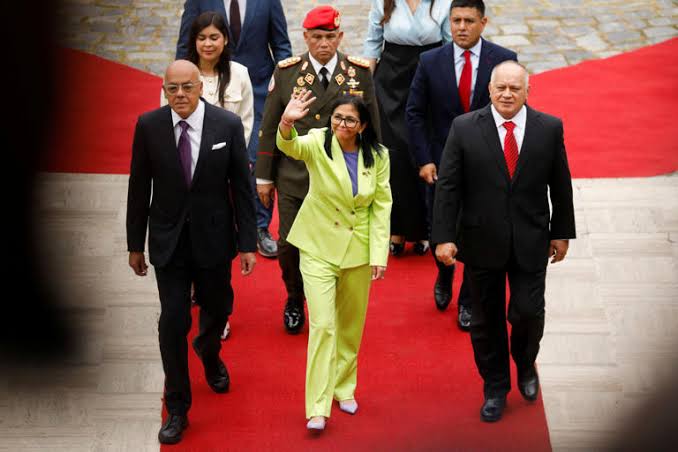
U.S. Domestic Law and Impeachment Prospects
Under the U.S. Constitution, Congress holds the power to declare war (Article I, Section 8). The War Powers Resolution of 1973 requires presidential notification to Congress within 48 hours of hostilities and limits unauthorized actions to 60 days without approval.
Trump did not seek or receive prior congressional authorization, nor was Congress notified in advance (as confirmed by Secretary of State Marco Rubio).
Critics, including Democratic lawmakers like Rep. Delia Ramirez and Sen. Scott Wiener, have called this an impeachable abuse of power, usurpation of congressional war authority, and violation of treaty obligations (e.g., the UN Charter as supreme law under Article VI).
Groups like Free Speech For People have urged impeachment and removal, citing high crimes and misdemeanors including aggression and corruption tied to oil interests.
However, with Republicans controlling Congress (as of early 2026), impeachment efforts have stalled. Previous War Powers Resolutions to curb further action in Venezuela were defeated in the House. No formal impeachment articles have advanced, and political realities make removal improbable.
Can Trump Be Jailed?
Impeachment is a political process leading to removal from office (and possible disqualification from future roles), but it does not impose criminal penalties. Criminal prosecution for international law breaches would require:
Domestic charges (e.g., violating U.S. laws on unauthorized use of force), which face enormous legal and political hurdles.
International mechanisms like the International Criminal Court (ICC), but the U.S. is not a party to the Rome Statute, and enforcement against a sitting or former president is unprecedented and practically impossible.
No credible legal pathway exists for jailing Trump over this without a dramatic shift in U.S. politics or international enforcement—neither of which appears realistic.
In summary, the headline captures real outrage from critics who view the Venezuela operation as unlawful and impeachable. Calls for accountability have grown, but they remain politically polarized and unlikely to result in impeachment or jail time under current conditions. The intervention continues to reshape U.S. foreign policy, regional dynamics, and global oil markets, with ongoing risks of escalation.
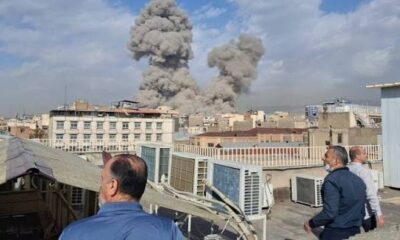



BREAKING: Iran’s supreme leader Ali Khamenei is dead after U.S. and IDF strike…

NEW: A U.S. official tells Fox News the strikes on Iran are expected to last for days — not just a few hours. The official and another source also confirmed to Fox News that there were no casualties from Iran’s strike on a U.S. Navy base in Bahrain. The missile hit an empty warehouse.

MIDEAST DIPLOMACY: White House press secretary Karoline Leavitt announced President Trump has spoken with numerous Middle East leaders following the joint US-Israel attack on Iran.

NEW: DHS Secretary Kristi Noem says she is in direct coordination with federal intelligence agencies on potential threats to the U.S. following joint strikes on Iran…

NEW: An FBI official tells Fox News that counterterrorism and counterintelligence teams are on elevated alert nationwide following coordinated U.S.-Israel airstrikes on Iran…

BREAKING: Israeli Defense Minister Israel Katz says Israel has launched a ‘preemptive’ strike on Iran, as Iranian state media report explosions in eastern and northern Tehran.

The USS Gerald R. Ford, the biggest U.S. aircraft carrier, has left port near the Greek island of Crete on Thursday…

STATE OF ALERT: The State Department is allowing non-essential personnel working at the U.S. Embassy in Jerusalem to leave Israel ahead of possible strikes on Iran.

BREAKING: Missiles have been launched from Iran towards Israel, says the Israeli military…

Live updates: U.S. military begins ‘major combat operations in Iran,’ Trump says…

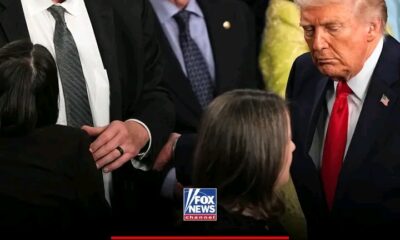
DIVIDED STATES: Sen. John Fetterman said he was likely the only Democrat to shake hands with President Trump at the State of the Union, describing his side of the aisle’s conduct as “disappointing,” adding he found it sad so many of his colleagues didn’t show up…
