
CELEBRITY
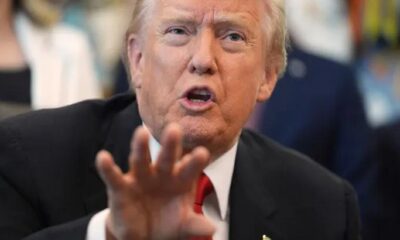
JUST IN: 🇺🇸 President Trump warns the US would have to pay back “hundreds of billions of dollars” if the Supreme Court rules his tariffs are illegal. “It would be a complete mess, and almost impossible for our country to pay.”

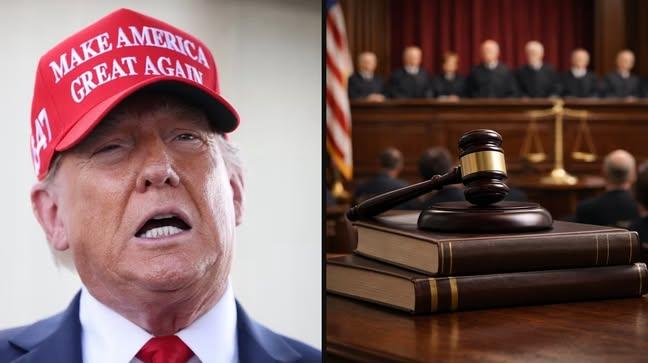
President Trump Issues Stark Warning: U.S. Could Face “Hundreds of Billions” in Repayments if Supreme Court Strikes Down Tariffs.
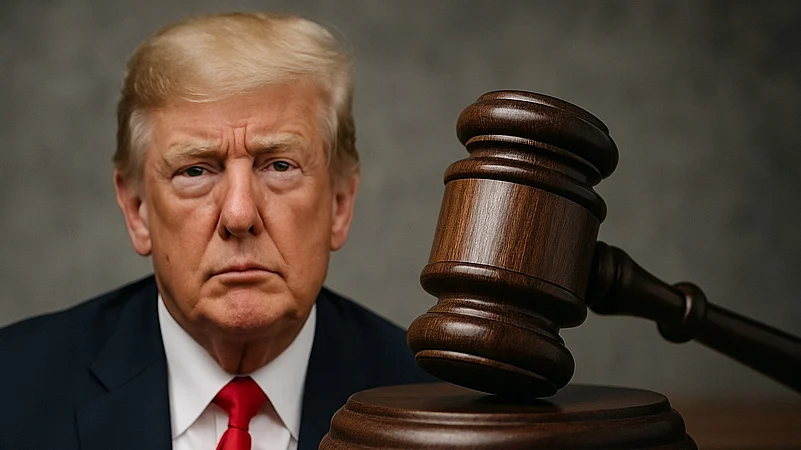
In a dramatic Truth Social post on January 12, 2026, President Donald Trump issued a forceful caution about the potential fallout from an anticipated Supreme Court ruling on his sweeping global tariffs. The president warned that if the court deems the tariffs illegal, the United States would be forced to repay “many Hundreds of Billions of Dollars” in collected duties, describing the scenario as a “complete mess” that would be “almost impossible” for the country to handle.
Trump’s statement comes amid heightened anticipation for the Supreme Court’s decision, which could arrive as early as mid-January following oral arguments held in November 2025. The case centers on whether Trump lawfully invoked the International Emergency Economic Powers Act (IEEPA) — a 1977 law designed for national emergencies — to impose broad “reciprocal” tariffs on imports from numerous trading partners, including escalated duties on China, Canada, Mexico, and others, citing issues like trade deficits and fentanyl trafficking.
The president framed the tariffs as a vital “National Security bonanza” that has bolstered U.S. manufacturing, job creation, and economic strength. He argued that reversing them would not only require refunding the revenue already collected from importers but could also trigger additional “payback” demands from countries and companies that invested in American factories, plants, and equipment to circumvent the duties.
“The actual numbers that we would have to pay back… would be many Hundreds of Billions of Dollars, and that doesn’t include the amount of ‘payback’ that Countries and Companies would require for the Investments they are making… When these Investments are added, we are talking about Trillions of Dollars! It would be a complete mess, and almost impossible for our Country to pay… In other words, if the Supreme Court rules against the United States of America on this National Security bonanza, WE’RE SCREWED!”
Trump’s post, shared widely across social media, emphasized the administrative nightmare of determining refunds — including calculating amounts, identifying recipients, and managing timelines — potentially stretching over many years.
Background on the Tariffs and Legal Challenge
Trump’s second-term tariff strategy, often dubbed “Liberation Day” measures, dramatically raised the average U.S. tariff rate to levels not seen since the 1930s. The administration has touted billions in revenue (with figures cited ranging from $133.5 billion to over $200 billion collected or projected), crediting the policy with driving economic growth and pressuring trading partners into fairer deals.
However, more than a dozen states, small businesses, and importers challenged the tariffs in court, arguing that they unlawfully bypass Congress’s constitutional authority over taxation and trade. Lower courts ruled against the use of emergency powers for such broad duties, but the measures remained in effect pending Supreme Court review.
Reports indicate that if the justices rule against the administration, the U.S. government could face refund claims totaling upwards of $150 billion from importers who paid the duties. Companies like Costco have already filed precautionary lawsuits to protect their rights to potential reimbursements.
During November 2025 oral arguments, justices across the ideological spectrum — including conservatives — expressed skepticism about the expansive interpretation of IEEPA, with some questioning whether the law was ever intended to authorize widespread tariffs.
Market and Economic Implications
The uncertainty has kept financial markets on edge, with analysts warning of disruptions to supply chains, consumer prices, and investment decisions. Trump has repeatedly defended the tariffs as an “overwhelming benefit” to national prosperity and security, contrasting them with what he calls unfair trade practices by other nations.
Critics, including some economists, argue that the duties function as taxes on American consumers and businesses, and that refunds — while logistically complex — could be managed without catastrophic damage, potentially through administrative processes at U.S. Customs and Border Protection.
As the Supreme Court prepares its next opinion releases (potentially mid-week in January 2026), all eyes remain on this high-stakes case. A ruling against the tariffs could force the administration to pivot to alternative legal authorities for trade policy, while an upholding decision would significantly expand presidential power in economic matters.
Trump’s blunt warning underscores the deep stakes involved — not just for trade balances, but for the balance of power between the executive branch and Congress in shaping America’s economic future. The coming decision could define a key pillar of his second term.







DIVIDED STATES: Sen. John Fetterman said he was likely the only Democrat to shake hands with President Trump at the State of the Union, describing his side of the aisle’s conduct as “disappointing,” adding he found it sad so many of his colleagues didn’t show up…

LET FREEDOM RING: White House Press Secretary Karoline Leavitt shares what Americans can expect during President Trump’s State of the Union address tonight:

President Donald Trump won the 2024 presidential race after his initial opponent, then-President Joe Biden, withdrew over worries about his age and mental sharpness,” writes Aaron Blake…

PRESIDENT TRUMP reiterated his peace through strength foreign policy strategy during his State of the Union address…

‘AMERICA FIRST’: President Trump predicts jobs and investment will flood the country because “we finally have a president who puts America first.”

LINES DRAWN: President Trump says the first duty of the U.S. government is to keep American citizens safe…

The Supreme Court just blocked Trump’s big tariffs plan under emergency powers, ruling 6-3 against him. Raise your hand if you want Trump impeached immediately ✋

“Donald Trump is unfit to be president. He’s corrupt, a serial liar, and he’s covering up the Epstein files,” Rep. Ted Lieu Do you agree with Ted Lieu?

BREAKING: Barack Obama is reportedly preparing to run in the 2028 U.S. presidential election. Raise your hand if you want Obama in 2028 ✋

Senator Mark Kelly: I think Trump was a horrible and failed president in his first term. Then he got re-elected, as a convicted felon, by the way. And I think he has exceeded all expectations about how bad he can be in a second term. 💯 Do you agree with Mark Kelly

Senator Patty Murray’s statement that “Trump is a disgrace” and the “most corrupt president in American history by a long shot” highlights the deep political divide and ongoing criticism of Donald Trump’s presidency…
