
NFL
Breaking : Oscar-winning actor Robert Duvall, whose career has spanned seven decades, has died at 95, his wife announced. Here’s what we know…

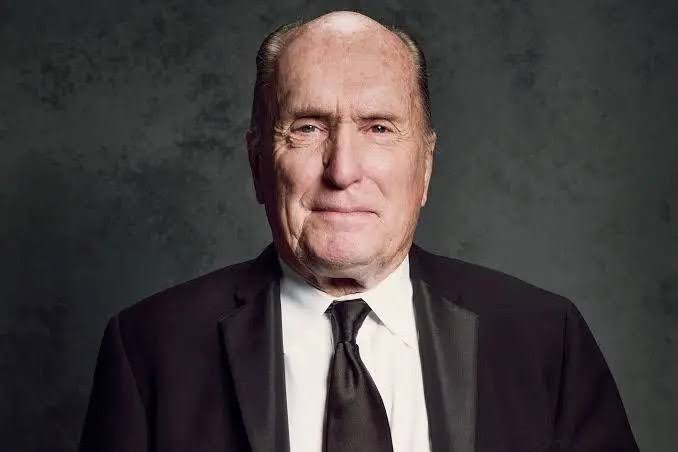
In a somber announcement that has sent ripples through Hollywood and beyond, Robert Duvall, the acclaimed Oscar-winning actor whose commanding presence defined generations of American cinema, has passed away at the age of 95.
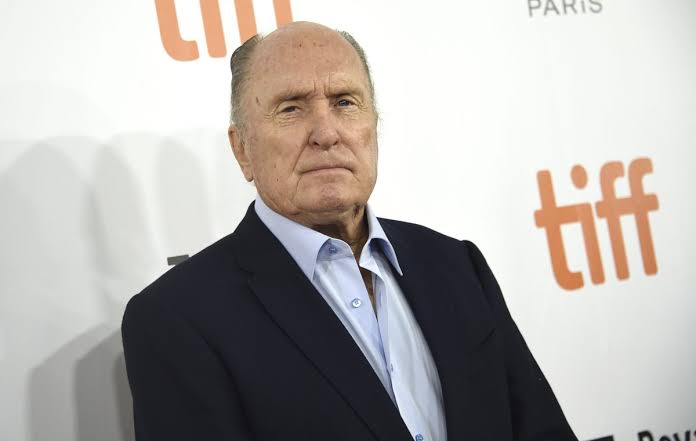
His wife, Luciana Duvall, confirmed the news in a heartfelt statement shared on the actor’s official Facebook page, revealing that he died peacefully at their home in Middleburg, Virginia, on Sunday, February 15, 2026, surrounded by love and comfort.
“Yesterday we said goodbye to my beloved husband, cherished friend, and one of the greatest actors of our time,” Luciana wrote. “Bob passed away peacefully at home, surrounded by love and comfort. To the world, he was an Academy Award-winning actor, a director, a storyteller. To me, he was simply everything.”
No cause of death was disclosed in the family statement or initial reports from major outlets, including The New York Times, CNN, Variety, and others.
Born Robert Selden Duvall on January 5, 1931, in San Diego, California, to a naval officer father, Duvall’s career spanned over seven decades, beginning in the 1950s with television appearances and stage work before exploding into film stardom. He became one of Hollywood’s most versatile and respected character actors, known for his ability to disappear completely into roles ranging from quiet intensity to explosive charisma.
Duvall earned widespread recognition for his portrayal of Tom Hagen, the calm, calculating consigliere to the Corleone family in Francis Ford Coppola’s The Godfather (1972) and its sequel. His work in Apocalypse Now (1979) delivered one of cinema’s most iconic lines as the eccentric Lieutenant Colonel Bill Kilgore, who famously declared, “I love the smell of napalm in the morning,” while overseeing a surreal beach assault.
His only Academy Award win came for Best Actor in Tender Mercies (1983), where he played a faded country music singer attempting redemption—an understated performance that showcased his depth and restraint. Duvall received additional Oscar nominations for The Godfather, Apocalypse Now, The Great Santini (1979), and The Apostle (1997), the latter of which he also wrote and directed.
Beyond these highlights, Duvall’s filmography includes memorable turns in classics like To Kill a Mockingbird (1962), MAS*H (1970), Network (1976), Lonesome Dove (1989, earning an Emmy), and many more. He also ventured into directing with films such as The Apostle and Crazy Heart (as producer), proving his talents extended behind the camera.
Tributes poured in quickly from colleagues and admirers. Francis Ford Coppola described the loss as “a blow,” calling Duvall “such a great actor and such an essential part of American Zoetrope from its beginning.” Others hailed him as a “giant” and “one of the greatest actors we ever had.”
Duvall, who lived much of his later life on a farm in Virginia, remained active into his 90s, sharing glimpses of his life—fitness routines, family moments, and birthday celebrations—on social media. His final posts reflected a man content with a long, accomplished life.
Robert Duvall’s passing marks the end of an era in American film. His chameleon-like ability to embody complex, often rugged men left an indelible mark on cinema, influencing countless actors who followed. He is survived by his wife Luciana, with whom he shared more than two decades of marriage, and will be remembered as a true legend whose work continues to inspire.

Telling the military to disobey illegal orders is not treason. Telling Ukraine to obey Russian-dictated orders is…

BREAKING: James Talarico UNLOADS on Trump and shows why Trump tried to censor him in powerful interview with Stephen Colbert…

News update : If Trump Wants People to Smile More, He Should Resign..

Breaking : Oscar-winning actor Robert Duvall, whose career has spanned seven decades, has died at 95, his wife announced. Here’s what we know…

BREAKING: Senator Mark Kelly announces that he’s “seriously” considering a presidential run after a string of high-profile victories against Trump’s corrupt Defense Secretary Pete Hegseth. His credentials speak for themselves…

BREAKING: Epstein victim just released tapes of Donald Trump that will force him to resign from the presidency…

Elon Musk is the first person ever to reach a $800,000,000,000 net worth. But Musk recently doubled down on the idea that “money can’t buy happiness.” When you own the stars, the platforms, and the future of transport, what is left to chase?

Trump: “Say Whatever You Want — I Can’t Be Impeached, I’ll Run Again, and I’ll Win”

Obama knew what Trump was, he warned everyone, and y’all accused him of overreacting. Raise your hand if you agree Barack Obama is 1000X better than Trump ✋

Breaking: Petition for Trump’s Impeachment Surges Past 100,000 Signature topping 900,000 so far Raise your hand if you want Trump impeached immediately…

U.S. taxpayers could receive record-high refunds under a sweeping tax plan backed by Donald Trump, sparking renewed debate over who stands to gain most from the legislation…
