
CELEBRITY
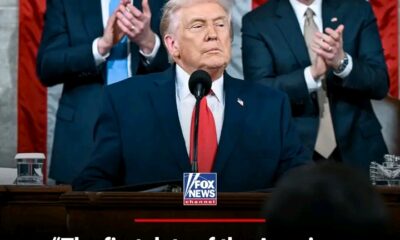
‘AMERICA FIRST’: President Trump predicts jobs and investment will flood the country because “we finally have a president who puts America first.”

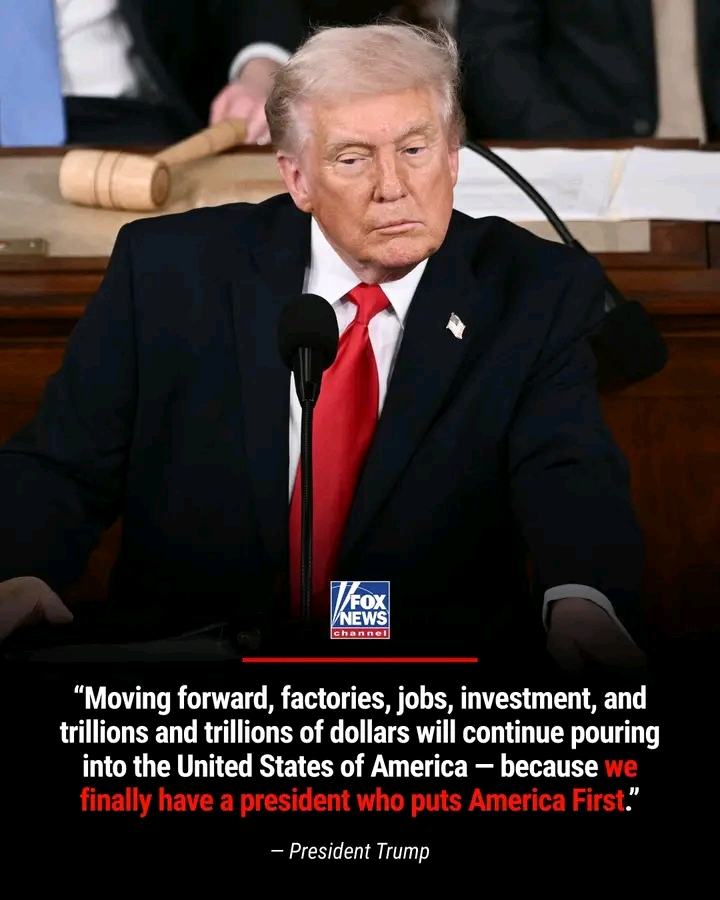
President Donald Trump delivered a bold message during his 2026 State of the Union address, declaring that the United States is on the cusp of an economic boom driven by his “America First” agenda. In a key passage that has since circulated widely across media and social platforms, the president predicted a massive influx of jobs and investment, attributing the shift directly to leadership that prioritizes American interests.
“Moving forward, factories, jobs, investment and trillions and trillions of dollars will continue pouring into the United States of America because we finally have a president who puts America first. I put America first. I love America.”
This line, met with applause in the chamber, encapsulated Trump’s optimistic vision for the nation’s economic future. He contrasted it with previous administrations, claiming decades of policies had drained wealth from hardworking Americans through unfair trade, excessive regulations, and misplaced priorities.
Context from the Address
In the address delivered on February 24, 2026, Trump highlighted early signs of progress in his second term. He pointed to commitments for massive foreign and domestic investments—citing figures in the trillions—pouring into U.S. manufacturing, technology, and infrastructure. The president referenced specific gains, such as thousands of new businesses forming, new factories and laboratories under construction, and the addition of 70,000 construction jobs in a short period.
Trump tied these developments to core elements of his “America First” strategy:
Tariffs on imports to protect domestic industries and generate revenue.
Deregulation to reduce burdens on businesses.
Tax reforms and incentives to encourage companies to build and hire in the U.S.
Energy independence and trade renegotiations to strengthen leverage.
He argued that these policies reverse long-standing trends where foreign nations “ripped off” the U.S., and instead channel resources back to American workers and communities.
Reactions and Coverage
The statement quickly became a rallying cry online and in conservative media. Outlets like Fox News amplified the headline: “‘AMERICA FIRST’: President Trump predicts jobs and investment will flood the country because ‘we finally have a president who puts America first.'” Supporters on platforms including X (formerly Twitter), Facebook, and Instagram shared clips and images from the speech, often pairing them with patriotic messaging and endorsements of the administration’s direction.
The White House echoed the sentiment in follow-up posts, stating: “The State of the Union is strong because we finally have a president who puts America First.” Many viewed the remarks as a reaffirmation of Trump’s core promise to prioritize U.S. citizens over global interests.
Broader Economic Debate
While the president’s prediction has energized his base, it has also sparked debate. Fact-checks and analyses note challenges in verifying the scale of claimed investments (e.g., references to $18 trillion in commitments have faced scrutiny for potential inflation or inclusion of non-binding pledges). Manufacturing sectors have shown mixed results in 2025, with some job losses reported amid tariff implementations and other factors like reduced immigration affecting labor supply.
Critics argue that sustained factory growth and broad wage gains have not fully materialized yet, pointing to slower overall job creation in certain periods and concerns over affordability. Supporters counter that these policies require time to fully take effect, with early indicators—like surging private-sector investment in semiconductors, data centers, and construction—showing promise for acceleration in 2026 and beyond.
Trump’s declaration underscores a central theme of his presidency: that putting America First—through protectionist trade measures, domestic incentives, and unapologetic nationalism—will unleash unprecedented prosperity. As the administration moves forward, the coming months and years will test whether this vision translates into the widespread job creation and investment surge he envisions. For now, the message resonates strongly with those who see it as a long-overdue correction in U.S. economic policy.

DIVIDED STATES: Sen. John Fetterman said he was likely the only Democrat to shake hands with President Trump at the State of the Union, describing his side of the aisle’s conduct as “disappointing,” adding he found it sad so many of his colleagues didn’t show up…

LET FREEDOM RING: White House Press Secretary Karoline Leavitt shares what Americans can expect during President Trump’s State of the Union address tonight:

President Donald Trump won the 2024 presidential race after his initial opponent, then-President Joe Biden, withdrew over worries about his age and mental sharpness,” writes Aaron Blake…

PRESIDENT TRUMP reiterated his peace through strength foreign policy strategy during his State of the Union address…

‘AMERICA FIRST’: President Trump predicts jobs and investment will flood the country because “we finally have a president who puts America first.”

LINES DRAWN: President Trump says the first duty of the U.S. government is to keep American citizens safe…

The Supreme Court just blocked Trump’s big tariffs plan under emergency powers, ruling 6-3 against him. Raise your hand if you want Trump impeached immediately ✋

“Donald Trump is unfit to be president. He’s corrupt, a serial liar, and he’s covering up the Epstein files,” Rep. Ted Lieu Do you agree with Ted Lieu?

BREAKING: Barack Obama is reportedly preparing to run in the 2028 U.S. presidential election. Raise your hand if you want Obama in 2028 ✋

Senator Mark Kelly: I think Trump was a horrible and failed president in his first term. Then he got re-elected, as a convicted felon, by the way. And I think he has exceeded all expectations about how bad he can be in a second term. 💯 Do you agree with Mark Kelly

Senator Patty Murray’s statement that “Trump is a disgrace” and the “most corrupt president in American history by a long shot” highlights the deep political divide and ongoing criticism of Donald Trump’s presidency…
