
CELEBRITY
Rep. Jamie Raskin Claims “Donald Trump’s Name Is All Over These Files” After Reviewing Unredacted Epstein Documents…

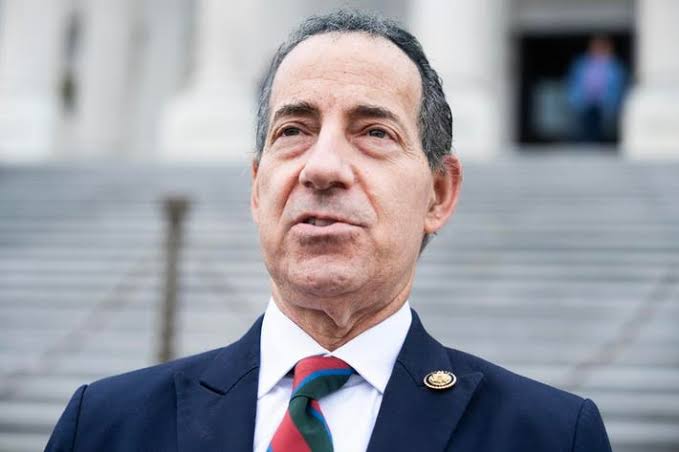
Representative Jamie Raskin (D-MD), the ranking member of the House Judiciary Committee, made headlines on Monday after viewing portions of the unredacted Jeffrey Epstein files at a Department of Justice facility. In comments to reporters following his review, Raskin stated that “Donald Trump’s name is all over these files,” linking the headline-grabbing phrase to what he described as frequent mentions of the president in the documents.
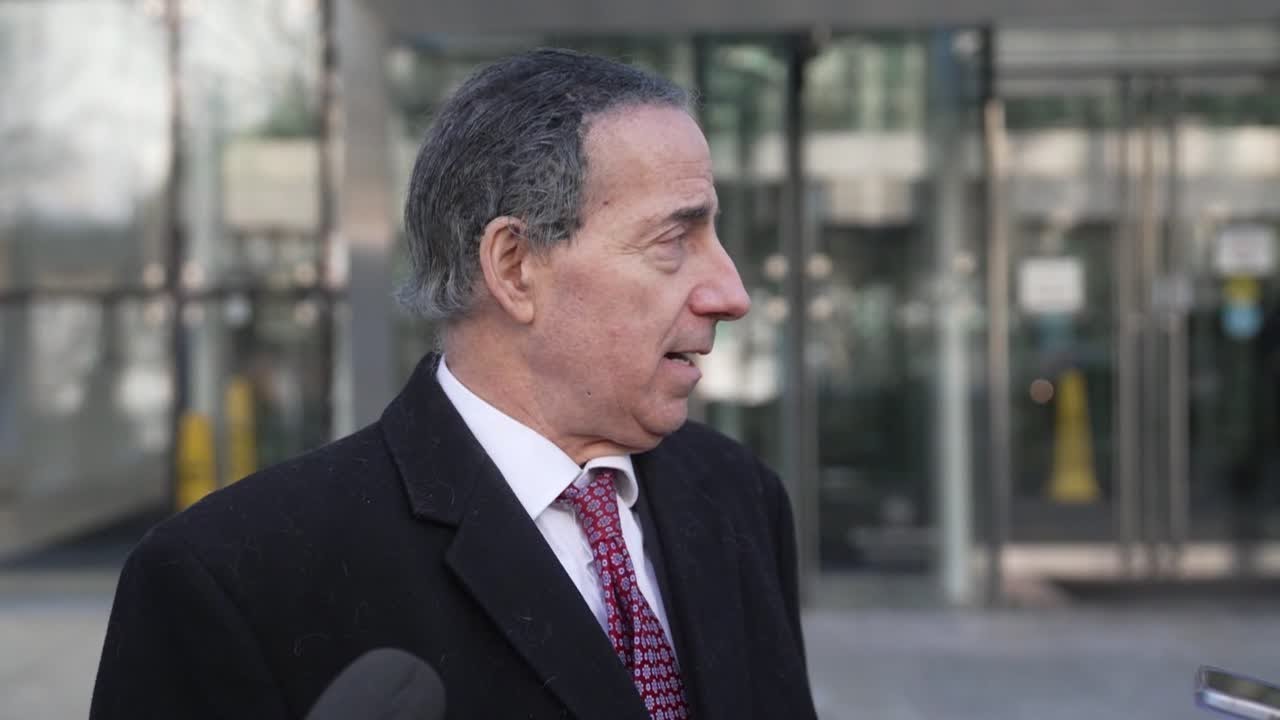
The remarks came amid growing bipartisan criticism of the DOJ’s handling of the Epstein-related records, which were made partially accessible to members of Congress under the Epstein Files Transparency Act. Lawmakers, including Raskin, Reps. Thomas Massie (R-KY) and Ro Khanna (D-CA), have accused the department of improper redactions that shield certain individuals while failing to protect victims’ identities.
Context of the Latest Developments
The Epstein files stem from federal investigations into the late financier Jeffrey Epstein’s sex-trafficking network. Public releases in recent years have included court documents, FBI reports, and other materials, but significant portions remained redacted. A 2025 law sponsored in part by Massie and Khanna mandated broader disclosure, leading to the DOJ allowing limited in-person access to unredacted versions starting early February 2026.
On the first day of access, Raskin spent time reviewing documents in a DOJ satellite office equipped with restricted computers. He described the process as severely limited—estimating that fully reviewing the over 3 million pages could take Congress years at the current pace.
Raskin highlighted several issues:
Excessive and “mysterious” redactions on non-victims, potentially to avoid “embarrassment, political sensitivity, or disgrace.”
Failure to redact survivors’ names in thousands of pages, exposing victims.
Specific mentions of President Trump in contexts that appeared redacted without clear justification.
One document Raskin referenced was an email from Epstein to Ghislaine Maxwell summarizing a conversation involving Epstein’s and Trump’s lawyers around 2009. According to Raskin, it quoted Trump stating that Epstein had been a guest at Mar-a-Lago but “had never been asked to leave.” Raskin noted this seemed to contradict Trump’s public claims of barring Epstein from the property after misconduct allegations surfaced.
Raskin emphasized that Trump’s name appeared repeatedly—often in news clippings, references, or other contexts—though he did not detail specific “heinous accusations of abuse” tied to the president in his public statements. He accused the DOJ of operating in “cover-up mode” for months and vowed to question Attorney General Pam Bondi about the redaction decisions.
Bipartisan Concerns and Broader Implications
Raskin was not alone in his criticisms. Massie and Khanna, after their own review, reported identifying at least six men—some with photographs—whose names were redacted despite apparent relevance to potential wrongdoing. They described the group as including U.S. citizens, a foreign national, a high-ranking foreign official, and a “prominent individual.” The lawmakers stressed that key FBI interview forms (FD-302s) and survivor statements remained partially redacted even in the “unredacted” set.
Raskin echoed calls for full transparency, arguing that a large-scale trafficking operation could not involve only Epstein and Maxwell. “There’s no way you run a billion-dollar international child sex trafficking ring with just two people committing crimes,” he said. He urged prioritizing survivor accounts to uncover additional co-conspirators.
The White House and DOJ have not immediately responded to Raskin’s specific claims about Trump mentions. Previous public releases showed Trump referenced over 38,000 times in Epstein-related materials, largely in media articles or peripheral contexts, according to analyses.
Ongoing Access and Next Steps
Congress members must provide 24 hours’ notice to view the files, with access tightly controlled. Raskin and others plan to push for explanations on redactions and potentially declassify more information.
The controversy underscores persistent demands for accountability in the Epstein case, years after his 2019 death and Maxwell’s conviction. As more lawmakers review the documents, further revelations—and political fallout—appear likely.





Rep. Jamie Raskin Claims “Donald Trump’s Name Is All Over These Files” After Reviewing Unredacted Epstein Documents…

JUST IN : French President Macron says the Trump administration is “openly anti-European” and wants to destroy the EU…

Senator Chris Murphy: Republicans are not willing to do anything, so for now, Trump and his friends will get away with their crimes. But the rule of law is COMING BACK. When it does, everyone who has traded government favors for cash are going to JAIL. Do you agree with Chris Murphy?

JUST IN. Trump just issued a “Save America Act” ultimatum—explicitly warning “we won’t have a country” if elections aren’t overhauled immediately. He is demanding mandatory Voter ID, proof of citizenship, and a near-total ban on mail-in ballots to “fix” what he calls a rigged system.

BREAKING: Representative Ilhan Omar said that she will start reading Epstein’s client names publicly if Pam Bondi’s Department of Justice does not release them. 100% AGREE!! Just Read Those Name Out Loud!!

BREAKING: I hope that he does it. Former president Barack Obama is thinking about Suing Trump for $150 billion for Defamation.

“JUST IN: Trump can be Impeached by Congress and JAILED for International Law Breaches for Invading sovereign nation Venezuela. Raise your hand if you agree 🖐️”

“BREAKING: Democrats believe the Epstein File was doctored by the DOJ and Trump and want a forensic analysis Raise your hand if you believe Trump doctored it ✋

BREAKING: I hope that she does it. Hillary Clinton is thinking about Suing Trump for $100 billion for Defamation as well as racism over White House targeted video at the Obamas. Raise your hand if you want Trump impeached immediately ✋

BREAKING: I hope that she does it. Hillary Clinton is thinking about Suing Trump for $100 billion for Defamation…

Zohran Mamdani has signed a new executive order that requires ICE to obtain a judicial warrant before entering New York City property…
