
CELEBRITY
JUST IN. Trump just issued a “Save America Act” ultimatum—explicitly warning “we won’t have a country” if elections aren’t overhauled immediately. He is demanding mandatory Voter ID, proof of citizenship, and a near-total ban on mail-in ballots to “fix” what he calls a rigged system.

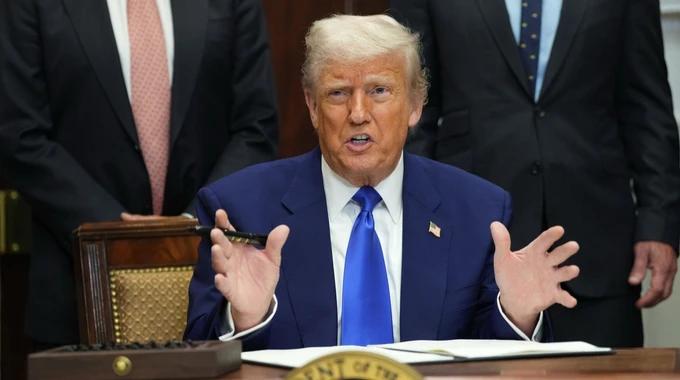
President Donald Trump has issued a stark warning about the future of the United States, declaring that the country faces an existential threat unless its election system undergoes immediate and sweeping reforms. In a recent Truth Social post, Trump described American elections as “rigged, stolen, and a laughingstock all over the world,” urging Republicans in Congress to rally behind what he called the “Save America Act” to prevent the nation from collapsing.
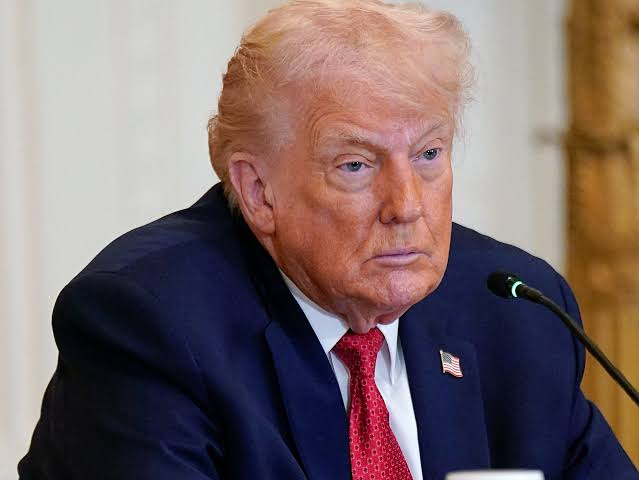
Trump’s message carried an urgent ultimatum: “We are either going to fix them, or we won’t have a country any longer.” He framed the proposed changes as essential to restoring integrity and public confidence in the electoral process, reiterating long-standing claims that the current system allows for widespread fraud.
Key Demands in the “Save America Act”
Trump outlined three core requirements as part of the legislation he is pushing:
Mandatory Voter ID: All voters would need to present government-issued photo identification to cast a ballot in federal elections.
Proof of Citizenship: Individuals must provide documentary evidence of U.S. citizenship (such as a passport or birth certificate) when registering to vote.
Near-Total Ban on Mail-In Ballots: Mail-in or absentee voting would be severely restricted, permitted only in limited cases like illness, disability, military service, or travel.
These proposals align closely with ongoing Republican-led efforts in Congress, including versions of the Safeguard American Voter Eligibility (SAVE) Act and its updated iterations, such as the SAVE America Act (e.g., H.R. 22 and related bills introduced in the 119th Congress). Supporters, including Rep. Chip Roy (R-TX), argue that these measures would prevent noncitizen voting and enhance election security. Trump has explicitly called on Republicans to fight for these reforms, emphasizing their necessity ahead of upcoming elections.
Context and Broader Push
Trump’s statement comes amid heightened debates over election integrity, particularly as the 2026 midterms approach. He has previously backed similar initiatives, including requirements for proof of citizenship and photo ID, and has criticized expansive mail-in voting practices—especially those expanded during the COVID-19 pandemic—as vulnerable to abuse.
The president’s rhetoric echoes his post-2020 election claims, though extensive investigations, audits, and court rulings have found no evidence of widespread fraud sufficient to alter major outcomes. Critics, including Democrats and voting rights organizations like the Brennan Center for Justice and Campaign Legal Center, argue that such requirements could create significant barriers, potentially disenfranchising millions of eligible voters—particularly those without easy access to required documents, low-income individuals, minorities, or elderly citizens.
Opponents view the proposals as a form of voter suppression, while proponents insist they are common-sense safeguards already in place in many states (e.g., voter ID laws exist in over 30 states, though requirements vary).
Potential Path Forward
The House of Representatives has been positioning for votes on related legislation, with procedural steps advancing bills that incorporate photo ID mandates and citizenship verification. However, passage faces steep challenges: Senate Democrats are expected to filibuster, and even some Republicans have expressed reservations about overriding state election authority or altering long-standing practices.
Trump’s blunt warning has amplified pressure on GOP lawmakers to act, framing the issue as a make-or-break moment for the nation’s democratic future. Whether Congress will deliver the overhaul he demands remains uncertain, but the president’s intervention has once again thrust election reform to the forefront of national discourse.

Senator Chris Murphy: Republicans are not willing to do anything, so for now, Trump and his friends will get away with their crimes. But the rule of law is COMING BACK. When it does, everyone who has traded government favors for cash are going to JAIL. Do you agree with Chris Murphy?

JUST IN. Trump just issued a “Save America Act” ultimatum—explicitly warning “we won’t have a country” if elections aren’t overhauled immediately. He is demanding mandatory Voter ID, proof of citizenship, and a near-total ban on mail-in ballots to “fix” what he calls a rigged system.

BREAKING: Representative Ilhan Omar said that she will start reading Epstein’s client names publicly if Pam Bondi’s Department of Justice does not release them. 100% AGREE!! Just Read Those Name Out Loud!!

BREAKING: I hope that he does it. Former president Barack Obama is thinking about Suing Trump for $150 billion for Defamation.

“JUST IN: Trump can be Impeached by Congress and JAILED for International Law Breaches for Invading sovereign nation Venezuela. Raise your hand if you agree 🖐️”

“BREAKING: Democrats believe the Epstein File was doctored by the DOJ and Trump and want a forensic analysis Raise your hand if you believe Trump doctored it ✋

BREAKING: I hope that she does it. Hillary Clinton is thinking about Suing Trump for $100 billion for Defamation as well as racism over White House targeted video at the Obamas. Raise your hand if you want Trump impeached immediately ✋

BREAKING: I hope that she does it. Hillary Clinton is thinking about Suing Trump for $100 billion for Defamation…

Zohran Mamdani has signed a new executive order that requires ICE to obtain a judicial warrant before entering New York City property…

For years, Green Day has been singing “I’m not part of the MAGA agenda” instead of “redneck agenda” during “American Idiot” at huge events. They’ve done it at Coachella, New Year’s Eve, everywhere. Now they’re set to perform at the Super Bowl. MAGA is about to lose it…

JUST IN : US Senator has officially called for Trump’s removal from office under 25th Amendment of The Constitution of the United States…
