
NEWS
Public Opinion Divided: Poll Reveals Split on Invoking 25th Amendment Against Trump…

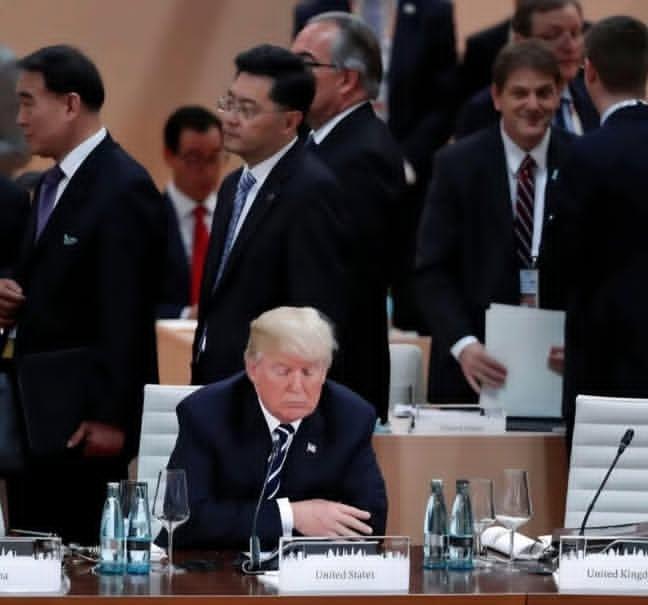
In the turbulent aftermath of the January 6, 2021, Capitol riot, a wave of polls captured the American public’s pulse on one of the most dramatic constitutional mechanisms available: the 25th Amendment. A headline-grabbing survey posed the question bluntly—”Who thinks Donald Trump should be removed from office with the 25th Amendment?”—sparking widespread debate about presidential fitness, accountability, and the limits of executive power. While the events are now five years in the past as of 2026, revisiting this poll offers insight into a pivotal moment in U.S. political history.
The Poll in Context.
The poll in question, conducted by ABC News/Ipsos in early January 2021, found that 56% of Americans supported invoking the 25th Amendment to remove then-President Donald Trump from office. This amendment, ratified in 1967, allows the vice president and a majority of the cabinet to declare the president unable to discharge their duties, effectively transferring power. The survey came amid calls from lawmakers, including some Republicans, for Vice President Mike Pence to lead such an effort following Trump’s role in inciting the insurrection that disrupted the certification of Joe Biden’s electoral victory.
Support for removal broke sharply along partisan lines: 94% of Democrats favored it, compared to just 13% of Republicans. Independents were more evenly split, with about half endorsing the move. This polarization mirrored broader societal rifts, amplified by the riot’s violence, which resulted in five deaths and numerous injuries. A separate Reuters/Ipsos poll around the same time echoed these findings, showing 57% of respondents believing Trump should be removed immediately, either via the 25th Amendment or impeachment.
Historical Backdrop and Legal Nuances
The 25th Amendment has rarely been invoked in practice, primarily for medical incapacitations, such as during presidential surgeries. Its Section 4, which deals with involuntary removal, had never been used before 2021’s discussions. Proponents argued that Trump’s actions—including his speech urging supporters to “fight like hell” before the Capitol breach—demonstrated an inability to fulfill his oath. Critics, however, contended that it was a political tool misused against a duly elected leader, potentially setting a dangerous precedent.
House Democrats, led by Speaker Nancy Pelosi, pushed for Pence to act, but he declined, citing the need for unity as Biden’s inauguration approached. Instead, the House impeached Trump for a second time on January 13, 2021, charging him with “incitement of insurrection.” The Senate later acquitted him, but the episode left a lasting scar on American democracy.
Public Reactions and Broader Implications
Responses to the poll were as varied as the nation itself. Supporters of removal, often citing the poll’s majority backing, viewed it as a safeguard against authoritarianism. “The American people have spoken clearly,” one commentator noted in a CNN analysis, emphasizing the poll’s reflection of widespread concern over Trump’s post-election behavior. On the other side, Trump loyalists dismissed the surveys as biased, pointing to methodological flaws like oversampling urban areas or leading questions. A Quinnipiac University poll from the same period showed slightly lower support at 45% for removal via the 25th Amendment, highlighting variances in polling firms’ approaches.
The debate extended beyond politics into cultural realms. Social media platforms buzzed with hashtags like #InvokeThe25th, while late-night shows and pundits dissected the polls nightly. In hindsight, these surveys captured a nation grappling with unprecedented challenges: a contested election, a global pandemic, and eroding trust in institutions.
Legacy in 2026
Today, with Trump having left office and pursued further political endeavors, including a 2024 run, the 25th Amendment poll serves as a historical benchmark. It underscores how public opinion can pressure—but not always dictate—constitutional actions. Similar discussions have arisen in other contexts, such as debates over President Biden’s fitness in his later years, though without the same intensity. As America continues to reflect on January 6, this poll reminds us of the fragile balance between democratic will and institutional safeguards.
In the end, the question “Who thinks Donald Trump should be removed from office with the 25th Amendment?” wasn’t just about one man or one moment—it was about the resilience of the republic itself.





BREAKING: It’s time to call it out for what it is as Donald Trump’s corruption and graft is at a scale we’ve never seen before in American history. Read more below 👇🏾👇🏾👇🏾

Tragic Shooting in Minneapolis: ICU Nurse Killed by Federal Agents Amid Immigration Crackdown…

Can Trump Be Impeached and Jailed for Breaching International Law in the Venezuela Invasion? Raise your hand up if you agree 🤚🤚

“NOW: Protesters barricading the roadway — federal agents currently unable to leave the scene following an ICE involved shooting” captures a tense, ongoing escalation in south Minneapolis on January 24, 2026.

Public Opinion Divided: Poll Reveals Split on Invoking 25th Amendment Against Trump…

Breaking New : Video of a young woman of Cherokee descent, from the ancestral people of the US, avoiding arrest by ICE agents—the immigration service so admired by Donald Trump—have gone viral…

Horrific: Watch as ICE breaks down the door of the home of an elderly Hmong man, drags him out without clothes, and detains him. The man is a U.S. citizen…

shocking news : A case from North Korea highlights the extreme repression of religious freedom in the isolated nation: a two-year-old child and his parents were reportedly sentenced to life imprisonment in a political prison camp after authorities discovered a Bible in their home…

Breaking: Petition for Trump’s Impeachment Surges Past 100,000 Signature topping 900,000 so far Raise your hand if you want Trump impeached immediately…

ACLU Files Class-Action Lawsuit in Minnesota to Halt ICE’s Alleged Racial Profiling and Unlawful Stops of Somali and Latino Residents…

JUST IN : Protesters shut down Cities Church congregation this morning after discovering that one of the lead pastors is an ICE agent….
