NEWS
shocking news : A case from North Korea highlights the extreme repression of religious freedom in the isolated nation: a two-year-old child and his parents were reportedly sentenced to life imprisonment in a political prison camp after authorities discovered a Bible in their home…

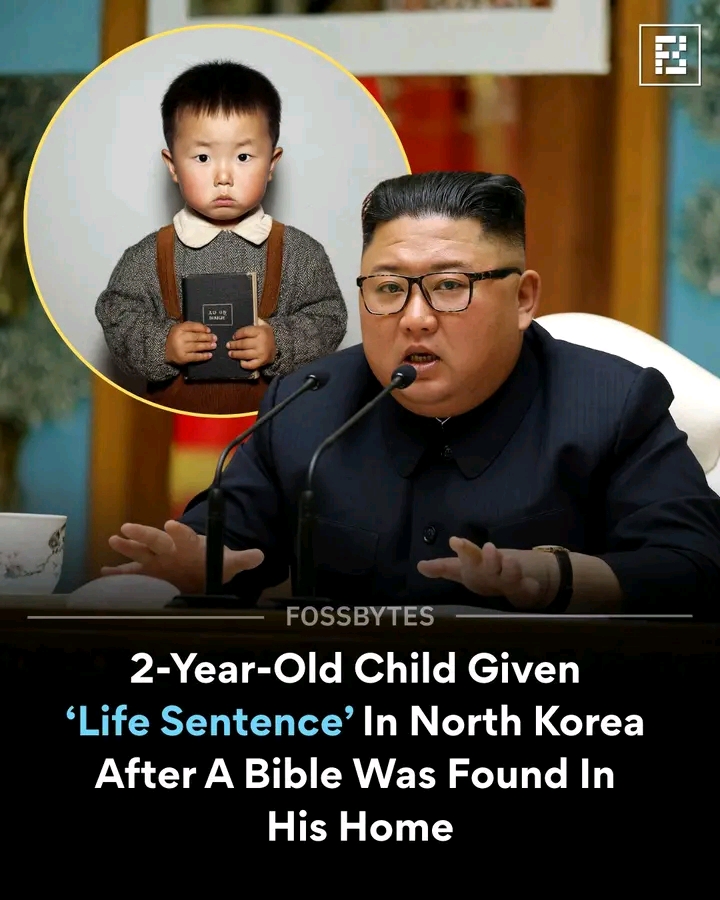
The incident, which dates back to 2009, is documented in multiple editions of the U.S. Department of State’s International Religious Freedom Report on North Korea, including the 2021 and 2022 reports. According to these accounts, the family was arrested due to their religious practices and possession of the Bible—a item strictly prohibited and viewed by the regime as a threat to state ideology and loyalty to the leadership.
North Korea’s constitution nominally guarantees freedom of religious belief, but with the caveat that religion cannot be used as a pretext for foreign influence or harming the state. In reality, the government maintains near-total control over any form of religious expression, particularly Christianity, which is seen as incompatible with the Juche ideology of self-reliance and absolute devotion to the Kim family dynasty.
The Brutal Reality of Political Prison Camps
The family was sent to one of North Korea’s notorious kwanliso (political prison camps), where inmates face indefinite detention, forced labor, starvation rations, torture, and other forms of severe mistreatment. Reports from defectors and human rights organizations describe camps where prisoners endure beatings, forced uncomfortable positions for extended periods, contaminated food, and verbal abuse. Children are not spared; they are often imprisoned alongside family members under the regime’s guilt-by-association policy, which can punish up to three generations for the “crimes” of one relative.
The U.S. State Department reports cite estimates from NGOs like Open Doors USA, indicating that 50,000 to 70,000 citizens—many of them Christians—are held in such facilities specifically for their faith or possession of religious materials. The Ministry of State Security handles most cases involving Christians through secret prosecutions, leading to sentences ranging from 15 years to life in prison camps.
Broader Context of Religious Persecution
This case is not isolated. North Korea ranks consistently as the worst country for Christian persecution according to organizations like Open Doors, which place it at the top of their World Watch List year after year. Possession of a Bible, contact with missionaries, or any private worship can trigger arrest, torture, execution, or family-wide punishment. Defectors have reported public executions for religious activities, forced abortions for pregnant believers, and indoctrination from childhood that portrays Christianity as subversive or tied to Western imperialism.
Recent reports, including the 2023 and later U.S. State Department updates, confirm that these patterns persist, with limited changes despite global attention. The regime’s closed nature makes independent verification difficult, and information often emerges years later through defector testimonies compiled by NGOs.
The 2009 case of the toddler and his parents serves as a grim reminder of the human cost of North Korea’s zero-tolerance approach to dissent, including religious belief. It underscores ongoing international concerns about crimes against humanity in the country’s prison system, as documented in UN inquiries and human rights reports.
As of 2026, North Korea continues to deny the existence of these political camps and rejects external criticism of its human rights record.

Horrific: Watch as ICE breaks down the door of the home of an elderly Hmong man, drags him out without clothes, and detains him. The man is a U.S. citizen…

shocking news : A case from North Korea highlights the extreme repression of religious freedom in the isolated nation: a two-year-old child and his parents were reportedly sentenced to life imprisonment in a political prison camp after authorities discovered a Bible in their home…

Breaking: Petition for Trump’s Impeachment Surges Past 100,000 Signature topping 900,000 so far Raise your hand if you want Trump impeached immediately…

ACLU Files Class-Action Lawsuit in Minnesota to Halt ICE’s Alleged Racial Profiling and Unlawful Stops of Somali and Latino Residents…

JUST IN : Protesters shut down Cities Church congregation this morning after discovering that one of the lead pastors is an ICE agent….

Breaking : An ICE or police agitator tried to start shit in Minneapolis and was extracted by five men in a van. They have provacatuers in the crowd…

JUST IN : Federal Judge Issues Preliminary Injunction: ICE Barred from Using Pepper Spray, Arrests, or Retaliation Against Peaceful Protesters in Minneapolis…

JUST IN: Taylor Swift Claims U.S. Democratic Institutions Have “Indulged Trump’s Anti-Democratic Behavior,” Stating the Congress and Supreme have Totally Betrayed American Citizens by not Impeaching the Facist…

BREAKING: Masked ICE agents stop a driver, demand ID, and refuse to explain why. The driver stays calm and asks for the reason. No answer. An agent then tries to open the car door aggressively. Under the Fourth Amendment, a stop is a seizure and requires reasonable suspicion. It appears he was stopped simply for being brown, despite being a U.S. citizen…

Breaking News: Nurse Struggles to Commute Amid ICE Harassment, Sparking Calls for Midterm Action and Impeachment…

JUST IN: 🇸🇪 Sweden PM Ulf Kristersson says: “We will not let ourselves be blackmailed. Only Denmark and Greenland decide on issues concerning Denmark and Greenland. I will always stand up for my country, and for our allied neighbors…
