
NEWS
Breaking News: Nurse Struggles to Commute Amid ICE Harassment, Sparking Calls for Midterm Action and Impeachment…

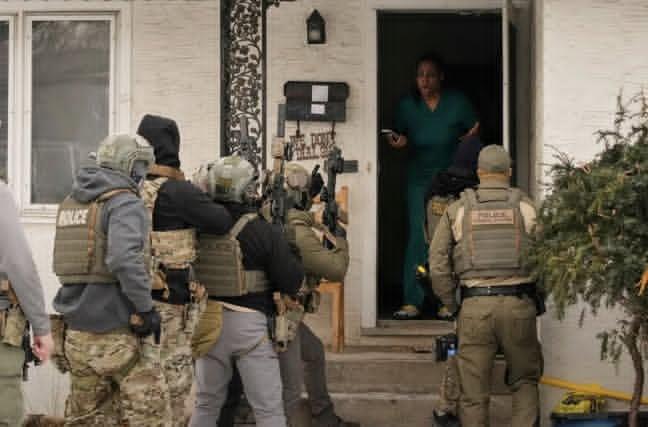
In the escalating national debate over U.S. Immigration and Customs Enforcement (ICE) operations under the Trump administration, a new wave of outrage has emerged as healthcare workers, including nurses, report increasing difficulties in simply getting to their jobs due to aggressive federal immigration enforcement tactics.
Reports from multiple cities, particularly in the Midwest and West Coast, highlight how intensified ICE presence — including checkpoints, patrols in public spaces, and high-visibility raids — has created an atmosphere of fear and disruption. Nurses, many of whom work long shifts in hospitals serving diverse communities, describe avoiding certain routes, changing commutes, or facing direct harassment and questioning while traveling to and from work. In some cases, U.S. citizen nurses of immigrant backgrounds have reported being stopped, profiled, or intimidated by agents, leading to delays, emotional distress, and safety concerns.
This comes amid a broader pattern where ICE activities have spilled into everyday life. For instance, in Minneapolis — a focal point of recent tensions — nurses working at shelters and hospitals have witnessed or filmed aggressive arrests, including incidents involving U.S. citizens mistaken or targeted during operations. One nurse, leaving her shift at a homeless shelter, captured video of forceful detentions nearby, contributing to widespread viral footage that has fueled public anger.
The situation has been exacerbated by the administration’s decision in early 2025 to rescind longstanding protections for “sensitive locations” like hospitals, allowing agents greater access to healthcare settings. Nurses’ unions, including National Nurses United and state associations, have condemned these intrusions, noting that they not only interfere with patient care but also deter immigrant communities from seeking medical help, creating a public health crisis.
Healthcare workers argue that the fear extends beyond the workplace. Many nurses now alter their daily commutes to avoid areas with known ICE activity, sometimes arriving late or exhausted before even starting their demanding shifts. In Reddit discussions and union statements, staff from hospitals in states like Minnesota, California, and Indiana have shared stories of colleagues changing schedules or facing threats from patients who weaponize ICE calls — all while agents’ presence nearby adds to the strain.
These accounts have intensified political fallout. Following a high-profile fatal shooting in Minneapolis on January 7, 2026 — where an ICE agent killed 37-year-old Renee Nicole Good during an enforcement operation — Democrats in Congress have ramped up demands for accountability.
House Democrats, led by Rep. Robin Kelly (D-Ill.), introduced articles of impeachment against Homeland Security Secretary Kristi Noem, accusing her of obstruction of Congress, violation of public trust through warrantless actions and excessive force, and self-dealing. More than 80 Democrats have co-sponsored the measure, framing it as a response to what they call a “reign of terror” by ICE under Noem’s leadership.
The calls extend to the upcoming midterm elections, with progressive voices urging voters to demand policy reversals, including reinstating sensitive-location protections, limiting ICE funding, and ending aggressive tactics. Democrats see immigration enforcement abuses — including impacts on essential workers like nurses — as a key issue that could sway voters concerned about civil rights, public health, and government overreach.
The administration defends the operations, emphasizing the removal of individuals with criminal histories and dismissing criticism as obstruction by “sanctuary” politicians. DHS officials report a sharp rise in assaults on ICE agents, attributing it to inflammatory rhetoric.
As protests continue in cities like Minneapolis and legal challenges mount (including lawsuits from states and municipalities alleging unconstitutional tactics), the story of nurses struggling to commute underscores a human cost: dedicated healthcare professionals caught in the crossfire of national policy battles. For many, the ability to safely reach their patients is now a casualty of the crackdown.
This developing situation highlights deep divisions over immigration enforcement, with calls for midterm action growing louder as the nation grapples with the balance between security and civil liberties.


SAD NEWS : Six American heroes have now been identified after losing their lives during Operation Epic Fury…

NEWS UPDATE : The results are in on President Trump’s job performance, with 57% of voters disapproving and 43% approving…

Breaking : Secretary of State Marco Rubio adressing the media on Iran today: “Let me explain to you guys this in simple English, ok? Iran is run by lunatics — religious fanatic lunatics…

Breaking: Petition for Trump’s Impeachment Surges Past 100,000 Signature topping 900,000 so far Raise your hand if you want Trump impeached immediately…

INCREDIBLE : Crowds gathered in cities around the world thanking President Trump for taking action against the Islamist regime controlling Iran…

MIDEAST DIPLOMACY: White House press secretary Karoline Leavitt says President Trump has been in touch with several Middle Eastern leaders following the joint U.S.–Israel strikes on Iran…

BREAKING : President Donald Trump vowed to “avenge” the deaths of three U.S. service members killed in action as the conflict involving Iran deepens across the Middle East…

Russian President Vladimir Putin made a strong statement while referring to former U.S. President Donald Trump, saying that the “so-called peacemaker” is now showing his “true colours…

BREAKING: The temporarily acting supreme leader of Iran, Ayatollah Arafeh, was killed after new strikes on Tehran, according to Israeli media. He was appointed this morning to replace Khamenei, who was also killed yesterday in strikes by the US and Israel…

During President Trump’s tenure, U.S. energy policy has largely treated oil as a pillar of economic security and geopolitical influence…

News update : The viral image circulating online depicts a striking and enigmatic scene: a humanoid figure standing beside what appears to be a large, landed craft positioned near a prominent government building…
