
NEWS
🚨JUST IN: 🇺🇸 A federal judge has blocked the Trump administration’s push to terminate the legal status of more than 8,400 family members of US citizens and green card holders who moved to the United States from seven Latin American countries…

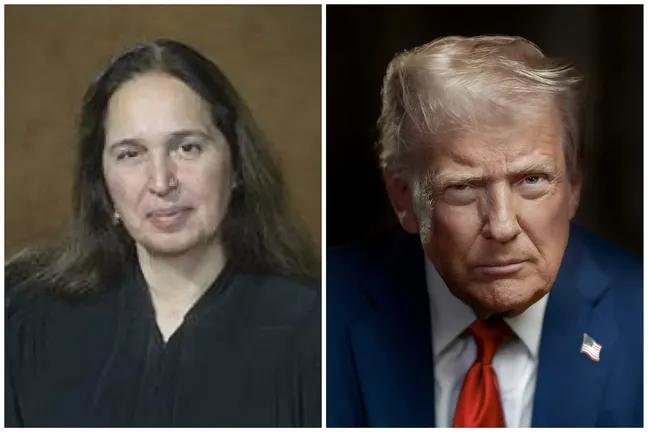
A federal judge in Boston has issued a ruling blocking the Trump administration’s effort to terminate the legal status of more than 8,400 family members of U.S. citizens and green card holders who entered the United States from seven Latin American countries under humanitarian parole programs.
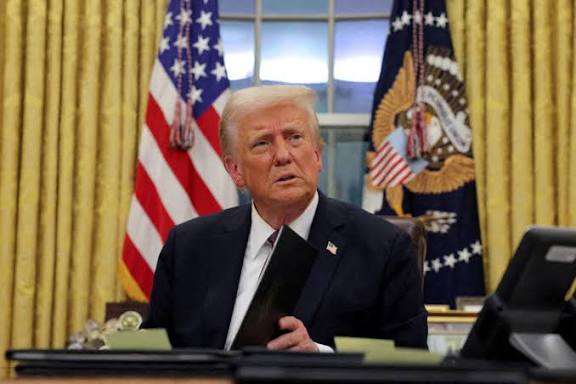
The decision, reported on January 25, 2026, halts the Department of Homeland Security’s (DHS) push to end Family Reunification Parole (FRP) processes for nationals from countries including Colombia, Cuba, Ecuador, El Salvador, Guatemala, and others in the region (with some reports referencing programs tied to broader Latin American humanitarian pathways).
Background on the Policy
The Trump administration, upon returning to office, moved swiftly on immigration enforcement priorities. In December 2025, DHS announced the termination of categorical family reunification parole programs, arguing they had been abused or improperly expanded under prior administrations. These programs allowed certain family members—such as spouses, children, parents, or siblings—of U.S. citizens or lawful permanent residents (green card holders) to enter the U.S. temporarily on parole, often with work authorization, while awaiting longer-term immigration processing.
The affected group of over 8,400 individuals had entered lawfully under these specific FRP designations for the seven Latin American nations. The administration’s termination notice aimed to revoke their parole status, potentially rendering them subject to removal proceedings and stripping associated work permits.
The Court’s Intervention
U.S. District Judge Indira Talwani (or a similar federal judge in Massachusetts, based on related filings) ruled that the DHS action violated federal rulemaking requirements. Key points from the decision include:
The administration failed to provide adequate notice and opportunity for public comment before abruptly ending the programs.
The termination lacked sufficient justification under administrative law standards.
The move risked irreparable harm to the affected families, separating them from U.S.-based relatives and disrupting lives built in the country.
The ruling grants at least a temporary block—potentially in the form of a temporary restraining order (TRO) or preliminary injunction—maintaining the beneficiaries’ legal status and protections for now. This allows them to remain in the U.S. and continue working while litigation proceeds.
Broader Context
This case fits into a pattern of early legal challenges to the second Trump administration’s immigration agenda. Similar rulings have addressed other parole terminations, including larger humanitarian parole efforts for Cubans, Haitians, Nicaraguans, and Venezuelans (CHNV program), where courts have granted class certifications and temporary halts affecting hundreds of thousands.
Immigrant advocacy groups, including those involved in the litigation, hailed the decision as a victory for family unity and due process. Critics of the programs argue they bypassed traditional visa pathways and contributed to border pressures.
The administration may appeal the ruling to higher courts, including the First Circuit Court of Appeals or potentially the Supreme Court, setting up further battles over executive authority in immigration policy.
For the more than 8,400 directly impacted individuals and their U.S. family members, the judge’s order provides immediate relief, preserving their ability to live and work in the United States amid ongoing uncertainty in U.S. immigration enforcement.







Obama knew what Trump was, he warned everyone, and y’all accused him of overreacting. Raise your hand if you agree Barack Obama is 1000X better than Trump ✋

Breaking: Petition for Trump’s Impeachment Surges Past 100,000 Signature topping 900,000 so far Raise your hand if you want Trump impeached immediately…

U.S. taxpayers could receive record-high refunds under a sweeping tax plan backed by Donald Trump, sparking renewed debate over who stands to gain most from the legislation…

News update : 9-Year-Old Cory Skipper Miller Delivers Powerful Speech at New York Town Hall, Challenging Trump’s Policies…

Breaking : . Trump’s a Monster. Why the Hell Is He Still Occupying the White House?

Just in : Trump with Howard Lutnick: “I don’t understand why the Jeffrey Epstein case would be of interest to anybody. It’s pretty boring stuff.”

71% of Americans believe the U.S. is out of control under Trump, according to survey. If you agree with me, say hi in the comment section…

Senator Chris Murphy: Republicans are not willing to do anything, so for now, Trump and his friends will get away with their crimes. But the rule of law is COMING BACK. When it does, everyone who has traded government favors for cash are going to JAIL. Do you agree with Chris Murphy?

JUST IN: President Donald Trump said he would accept the results of the 2026 U.S. midterm elections only if he believes they are honest

Thomas Massie: We should cancel Presidents’ Day until we have a ‘REAL’ president — one who builds this country up instead of DESTROY IT!!

JUST IN- They’ve identified the White House staffer that posted the racists meme on social media. Here is his picture. Hope they do the right thing and fire the staffer. 😡 😢 Raise your hand if you want Trump impeached immediately ✋
